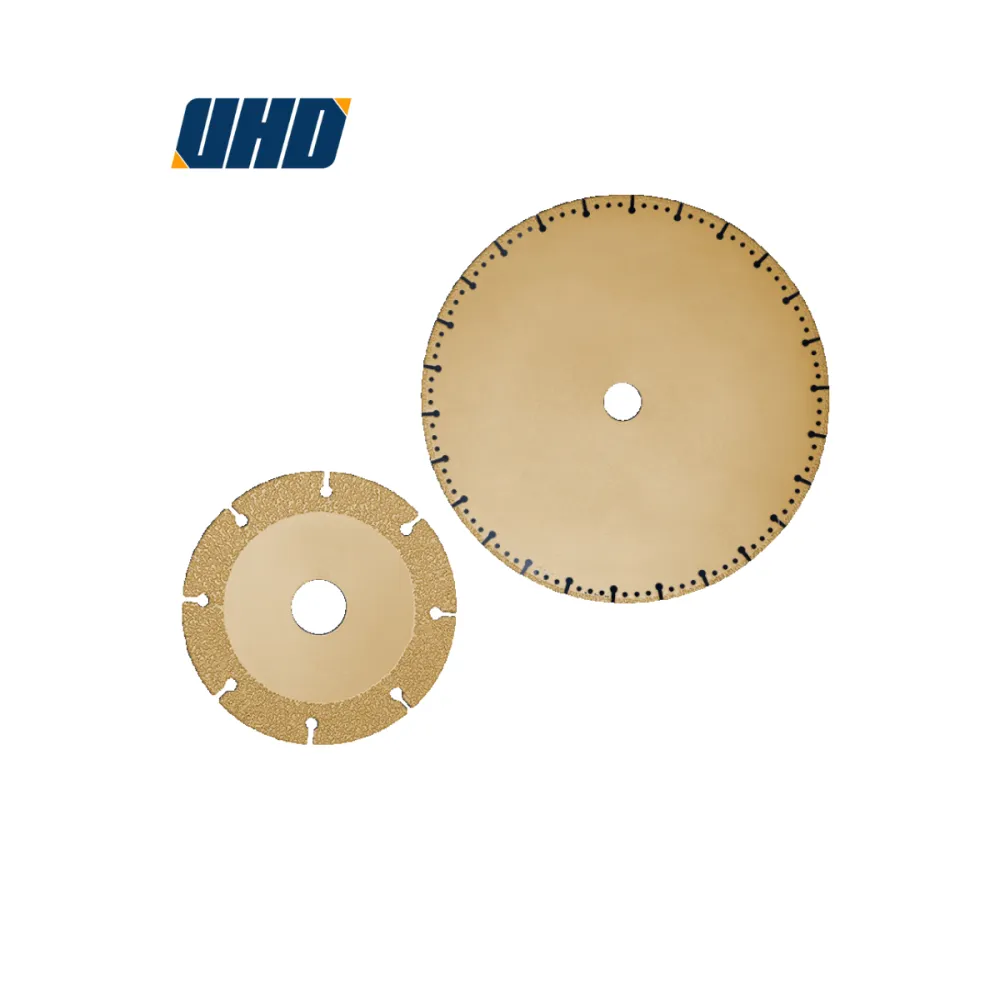
In today’s industrial landscape, where environmental compliance and worker safety are non-negotiables, the shift from traditional resin-bonded to brazed diamond blades is no longer just an upgrade—it’s a strategic necessity. But what makes brazed diamond blades so effective at reducing dust? Let’s break down the science, real-world data, and tangible benefits for B2B buyers.
Unlike conventional resin blades that rely on random diamond distribution, brazed diamond blades use high-density diamond particle placement (typically 80–120 carats per inch) and a stable steel matrix. This ensures consistent cutting force, minimal vibration, and reduced micro-fracture of material—key factors in minimizing airborne particulates.
| Cutting Material | Dust Reduction vs. Resin Blade (%) | Avg. Blade Life Increase |
|---|---|---|
| Gray Cast Iron | 67% | +45% |
| Stainless Steel | 62% | +38% |
| Granite & Marble | 71% | +52% |
“We switched to brazed diamond blades last year and saw immediate improvements—not only in air quality but also in our OSHA compliance scores. Our operators report less fatigue and fewer respiratory complaints.” — Martin Lee, Plant Manager, Metalworks Inc., USA
The key lies in how heat is managed during cutting. Brazed blades maintain thermal stability up to 600°C, preventing premature diamond degradation—a common cause of fine dust generation in resin blades. Additionally, the uniform bond structure captures particles at the source rather than letting them disperse into the air.
A recent study by the Industrial Safety Institute found that workshops using brazed diamond blades had PM2.5 levels averaging 12 μg/m³—well below the WHO recommended limit of 25 μg/m³—compared to 38 μg/m³ with standard resin blades.
This isn’t just about meeting regulations—it’s about creating a healthier work environment, reducing long-term healthcare costs, and aligning with ESG goals. Companies adopting brazed diamond technology see a measurable drop in absenteeism due to respiratory issues, plus faster throughput thanks to extended blade life.
For manufacturers aiming to build green factories or qualify for sustainability certifications like ISO 14001, this switch offers a clear ROI: lower dust = fewer fines, better employee retention, and stronger brand reputation.
Explore our full range of brazed diamond blades engineered for precision, durability, and low-dust performance across metals, stone, and composites.
Get Your Free Sample Pack Today