Burrs, edge chipping, and airborne dust are not just “quality issues”—they ripple into rework hours, tool wear, jobsite complaints, and environmental reporting pressure. In real projects, a small increase in micro-chipping can turn into visible edge defects after polishing, while excessive dust can force work stoppages or stricter containment. This guide explains how modern welded diamond saw blades achieve cleaner cuts on granite and marble by improving the rim/segment design, stabilizing the cutting process, and aligning speed, feed, and cooling to the stone’s physical behavior.
Burrs and edge breakouts typically arise when the blade-stone interaction becomes unstable: vibration spikes, diamonds plow rather than cut, and thermal stress weakens the edge. Dust rises when dry cutting, insufficient water delivery, or overheated segments accelerate micro-fracturing and “powdering” at the kerf.
Field reality: On decorative edges and visible façades, contractors often report that a “slightly rough” cut face can add 10–25% extra grinding/polishing time per batch. Meanwhile, fine silica-containing dust from granite raises additional control requirements, especially in enclosed renovation sites.

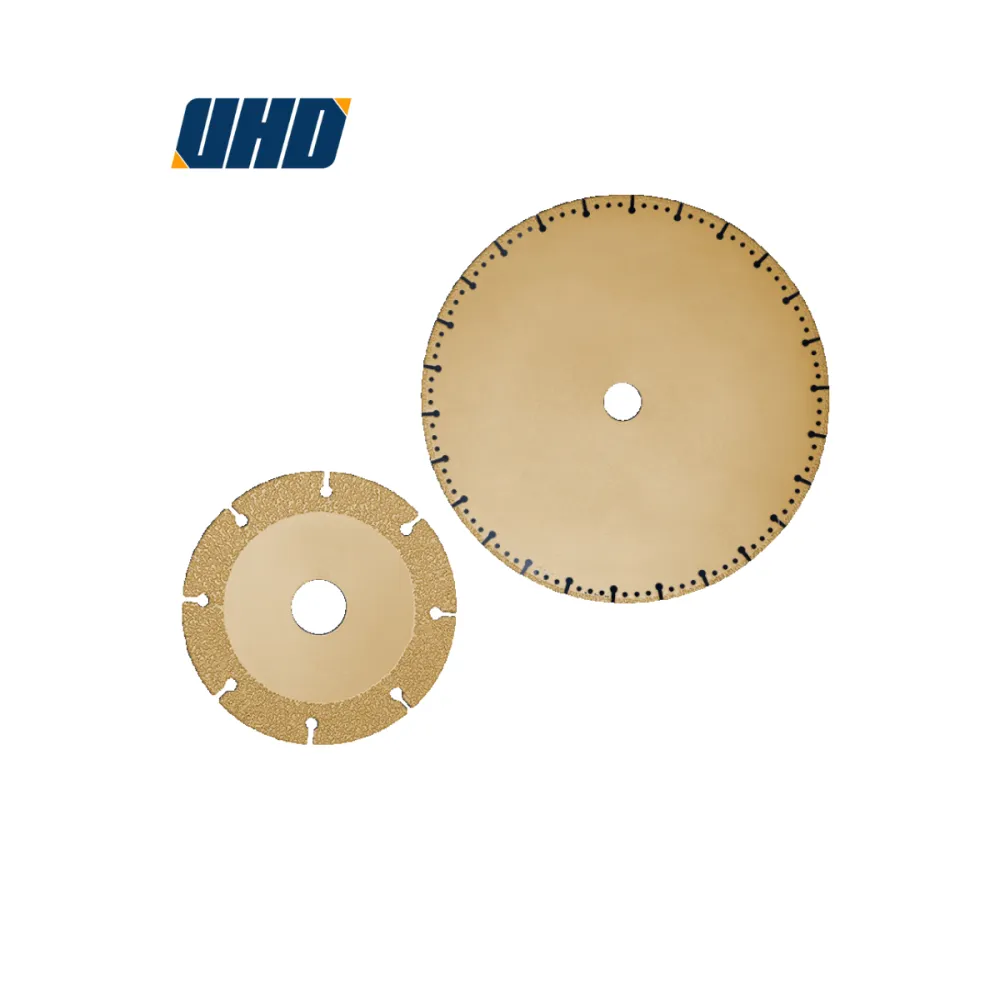
Compared with basic blades, advanced welded diamond designs focus on stable cutting action and efficient heat removal. The goal is simple: keep diamond exposure consistent, minimize lateral vibration, and prevent overheating that turns cutting into grinding.
A burr-free cut depends on how the segment enters, maintains contact, and exits the stone. Modern segment profiles commonly use controlled entry edges (micro-chamfered or optimized leading angles) to reduce impact load. When entry shock is reduced, the edge is less likely to chip—especially on brittle marble veins or granite crystals.
Uniform diamond placement helps the blade maintain a steady “bite.” In practice, this can reduce vibration and stabilize kerf width, which supports better edge straightness and lower micro-cracking. Many production teams observe that stable diamond exposure also helps extend effective sharpness, reducing the frequency of dressing.
Cooling is not just about temperature; it is also about flushing. Effective water delivery carries away slurry and prevents segment glazing. As a reference in wet cutting, many workshops aim for a steady flow in the range of 6–12 L/min for common bridge saw operations (adjusted by blade diameter, stone density, and cut depth), ensuring the water hits both sides of the blade near the segment contact area.
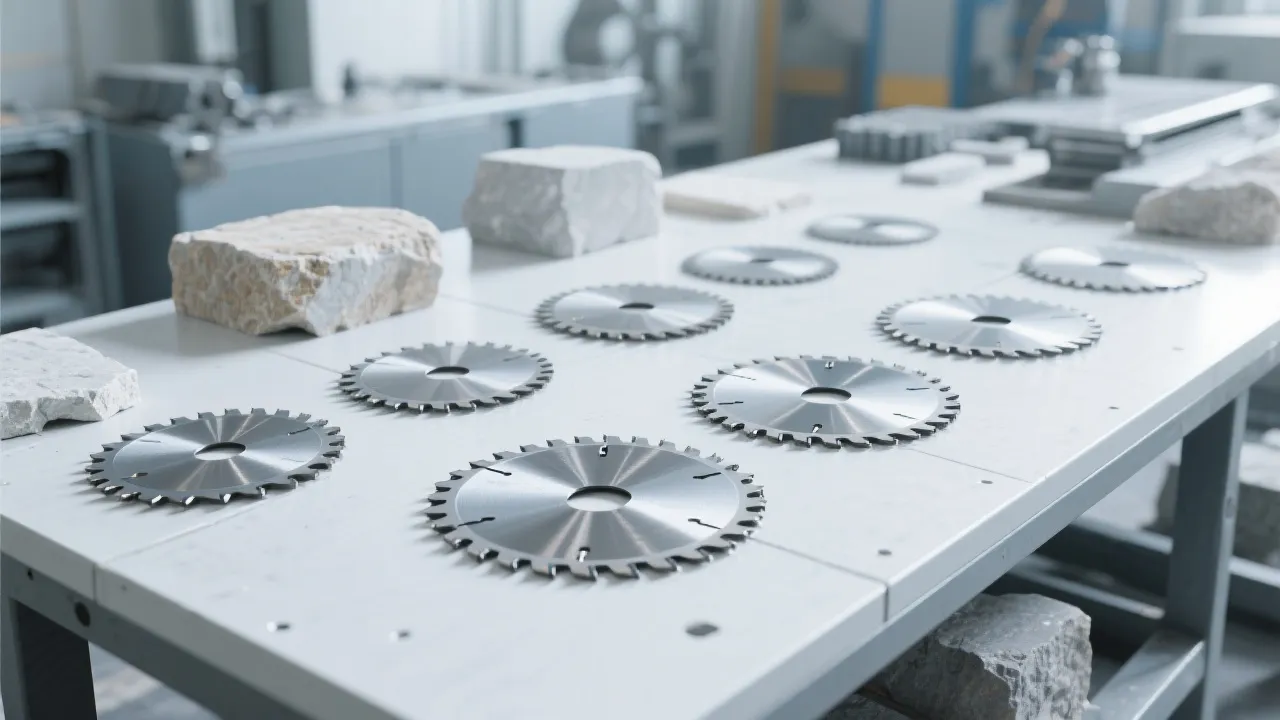
Stone is not “one material.” Granite generally demands higher cutting energy and better heat management; marble is softer but can chip along veins if entry shock or vibration is high. The table below offers practical starting ranges for workshops and jobsite cutting; final values should be tuned by machine rigidity, blade diameter, and desired finish.
| Material | Typical Challenge | Blade Peripheral Speed | Feed Rate (Bridge Saw Reference) | Cooling & Notes |
|---|---|---|---|---|
| Granite | High hardness, heat buildup, dust risk when dry | 30–45 m/s | 0.8–2.5 m/min | Prioritize flushing; keep water stable; avoid glazing by tuning feed/RPM balance |
| Marble | Vein chipping, edge breakout, surface bruising | 25–40 m/s | 1.0–3.5 m/min | Use smoother entry; ensure rigid clamping; avoid “hammering” at start/exit |
Operator tip: If the blade shows signs of glazing (polished segment face, rising noise, slower cutting), increase feed slightly or reduce RPM within a safe range, and verify water delivery. Glazing often precedes burrs because it increases lateral force and vibration.
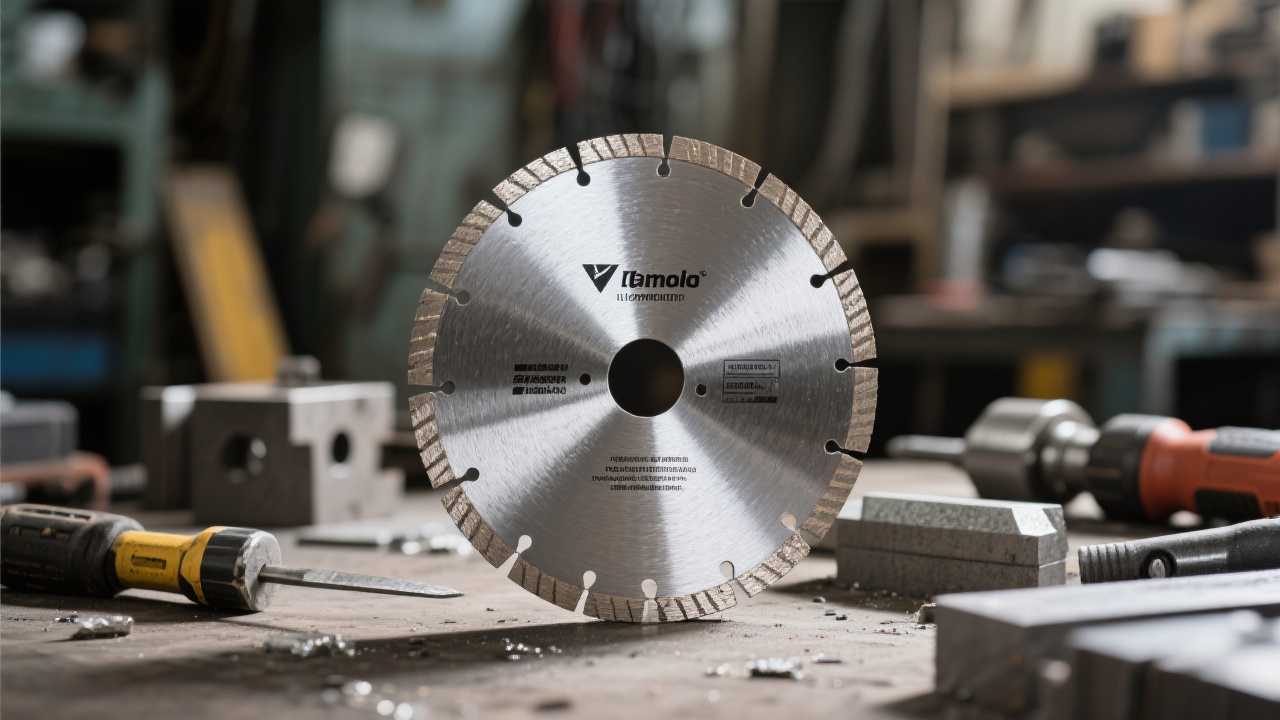
Even a high-performance welded diamond blade will not deliver burr-free edges if the setup “moves.” The practical difference between average and excellent cutting usually comes down to stability and small habits that control shock and vibration.
Burrs are often “vibration fingerprints.” When vibration rises, the blade oscillates laterally, the kerf widens unevenly, and the edge fractures. In many workshops, improving rigidity and parameter balance can reduce visible edge defects by 20–40% on repeat jobs—especially on thick granite where segment load is high.
Low-dust cutting is a system outcome: blade design + water management + containment + housekeeping. For granite, fine respirable dust is a key risk factor; wet cutting and proper capture can drastically cut airborne particles compared with uncontrolled dry cutting.
Reference data (jobsite benchmark): Switching from uncontrolled dry cutting to wet cutting with effective flushing and basic containment is often associated with 70–95% reduction in visible airborne dust in practical construction settings (results vary by tool type, enclosure, and airflow).

In a mid-volume stone fabrication workflow cutting mixed granite countertop blanks and marble vanity tops, teams commonly aim for a cut that is “polish-ready” with minimal edge touch-up. When a welded diamond blade is matched to the stone category and supported by stable parameters and reliable cooling, results typically show up in three places: fewer edge chips, smoother cut faces, and steadier cutting speed across the shift.
For teams targeting burr-free edges, lower dust, and more predictable cutting on granite and marble, the fastest wins usually come from the blade design + parameter window + cooling delivery working as one.
Explore high-performance welded diamond saw blades & download the technical white paperMany buyers prefer a quick selection checklist (stone type, machine power, blade diameter, desired finish). The downloadable document includes a parameter tuning sheet and a cooling/nozzle layout reference used by field teams.