Stone Cutting Saw Blade Vibration Control: Practical Methods for Stable, Safe Cutting
11 02,2026
Technical knowledge
This article explains why vibration occurs in stone cutting saw blades, how it degrades cut quality and accelerates machine wear, and what technicians can do to stabilize the entire cutting system. It focuses on four proven control levers—blade core stiffness design, segment (tip) balance calibration, high-precision clamping and flange alignment, and saw–blade compatibility checks (speed, power, spindle condition, and feed strategy). Step-by-step installation and troubleshooting guidance is supported by clear diagrams, on-site photos, and short animation demos to help standardize setup and quickly pinpoint abnormal vibration sources. Real-world cases from stone factories and jobsite crews are included to show measurable improvements in stability and productivity. The article also references the structural advantages of the Youde Superhard brazed diamond saw blade 400H as a practical option for users seeking higher stiffness, better balance consistency, and more stable cutting performance, with an interactive Q&A section to encourage sharing of field experience and follow-up technical consultation.
Stone Cutting Saw Blade Vibration Control: Practical Methods to Improve Stability and Cut Quality
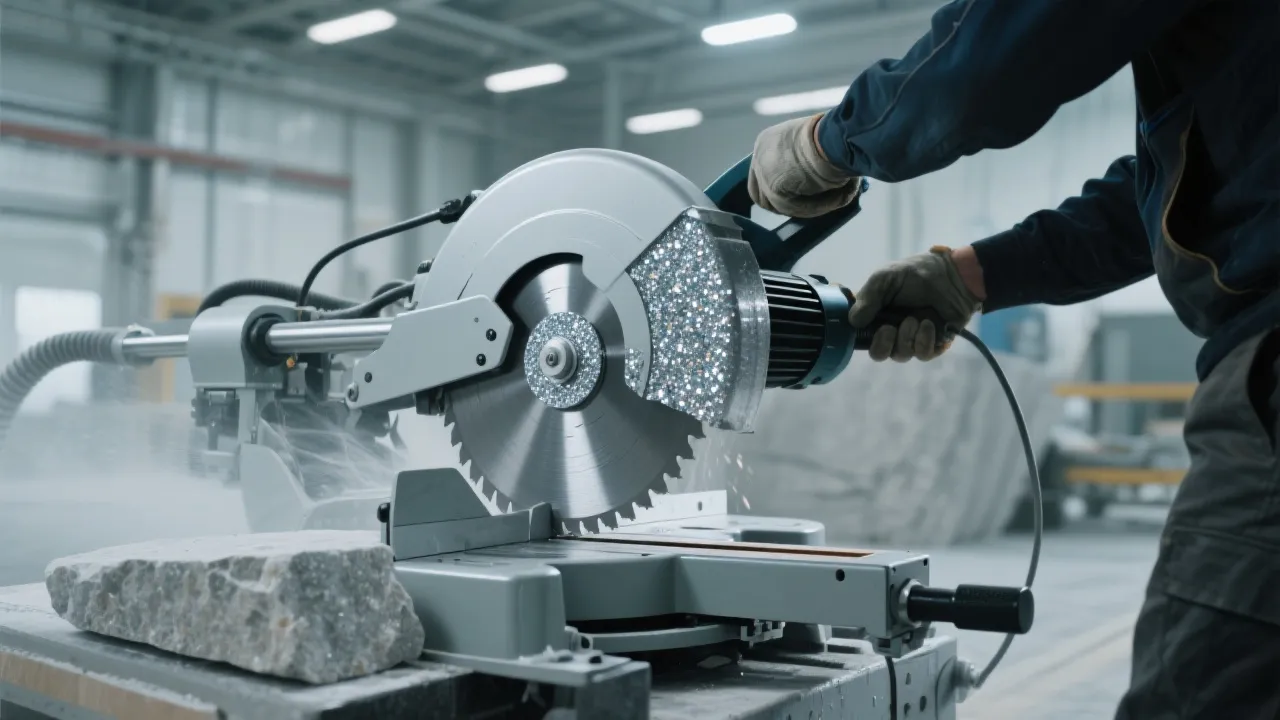
In stone processing, blade vibration is rarely “just a noise problem.” It typically shows up as chipping at the edge, wavy kerfs, unexpected segment wear, and—at worst—equipment stress that shortens spindle and bearing life. This guide explains why vibration happens, what it does to cut results, and how to control it through stiffness design, segment balance calibration, clamping precision, and machine–blade matching. It also references the structural advantages of the UD Superhard brazed diamond saw blade 400H for stable, efficient cutting.
Why Saw Blade Vibration Happens (And Why It Gets Worse Under Load)
Blade vibration is usually a combination of excitation (forces that trigger oscillation) and insufficient system damping (the ability to absorb that oscillation). In stone cutting, excitation commonly comes from discontinuous contact between segments and the stone, runout in the spindle/flange, and uneven segment height or weight distribution.
Common root causes
- Excessive radial/axial runout (blade, flange, or spindle)
- Blade stiffness too low for diameter/thickness and feed rate
- Segment imbalance (mass, brazing consistency, uneven height)
- Poor clamping: dirty flanges, uneven torque, damaged arbor
- Mismatch between RPM, peripheral speed, and stone hardness
Typical “in-process” triggers
- Entering/exiting the cut too aggressively (impact load)
- Insufficient water flow causing glazing and micro-bouncing
- Stone with mixed density (veins) creating periodic cutting resistance
- Worn spindle bearings amplifying resonance
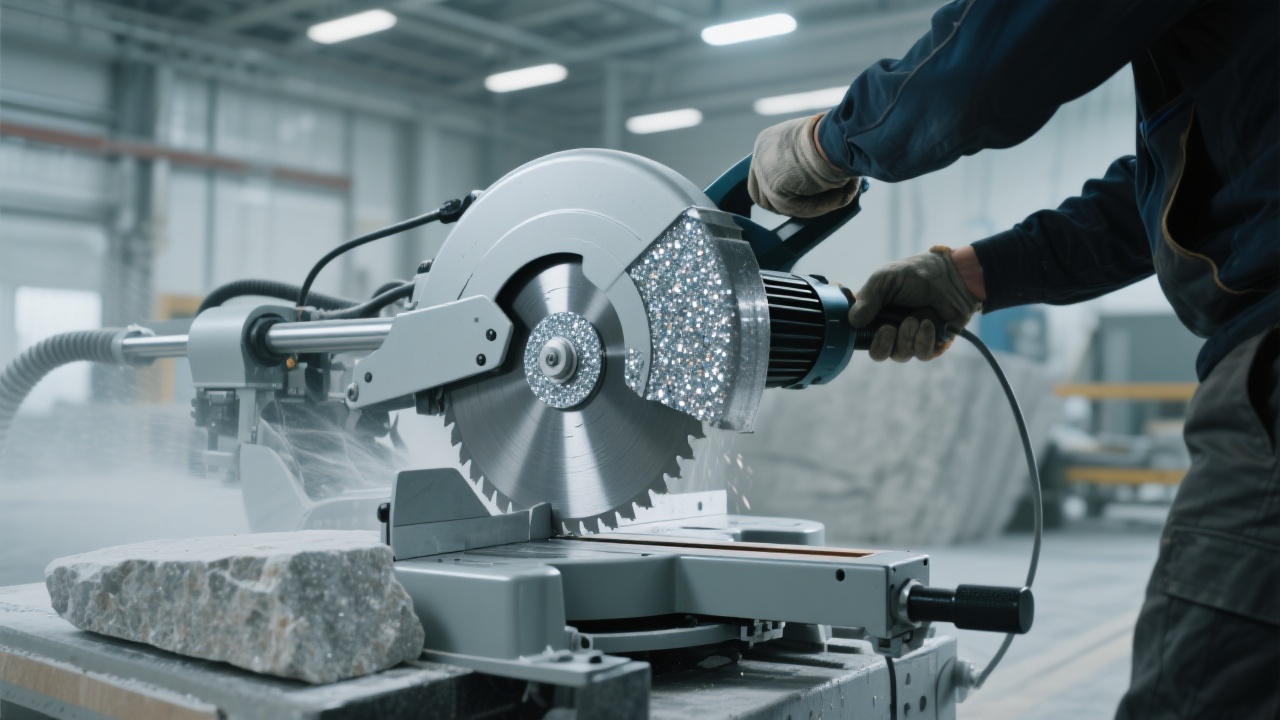
What Vibration Does to Cut Quality and Equipment Safety
Even small oscillations can turn into measurable quality loss. In many stone plants, operators notice the problem only after seeing edge chipping or abnormal noise—but the earlier indicators are often kerf widening, surface waviness, and segment wear that doesn’t match the expected life curve.
Reference impact ranges (field-observed, varies by machine condition)
| Symptom |
Likely vibration-related cause |
Typical consequence |
| Wavy cut / “snake line” |
Blade resonance, low stiffness, spindle runout |
Rework; thickness tolerance drift (often 0.2–0.6 mm) |
| Edge chipping |
Impact loads + micro-bouncing; improper feed entry |
Higher scrap; more polishing time (5–15%) |
| Abnormal segment wear pattern |
Imbalance, uneven segment height, poor clamping |
Life reduction (commonly 10–30%) |
| High noise + hot arbor area |
Flange face contamination; bearing issues |
Bearing fatigue; downtime risk increases |
Note: These are practical reference ranges observed across common bridge saw and cutter setups. Actual results depend on stone type, coolant, spindle health, and operator technique.
Four Core Technologies That Stabilize the Blade System
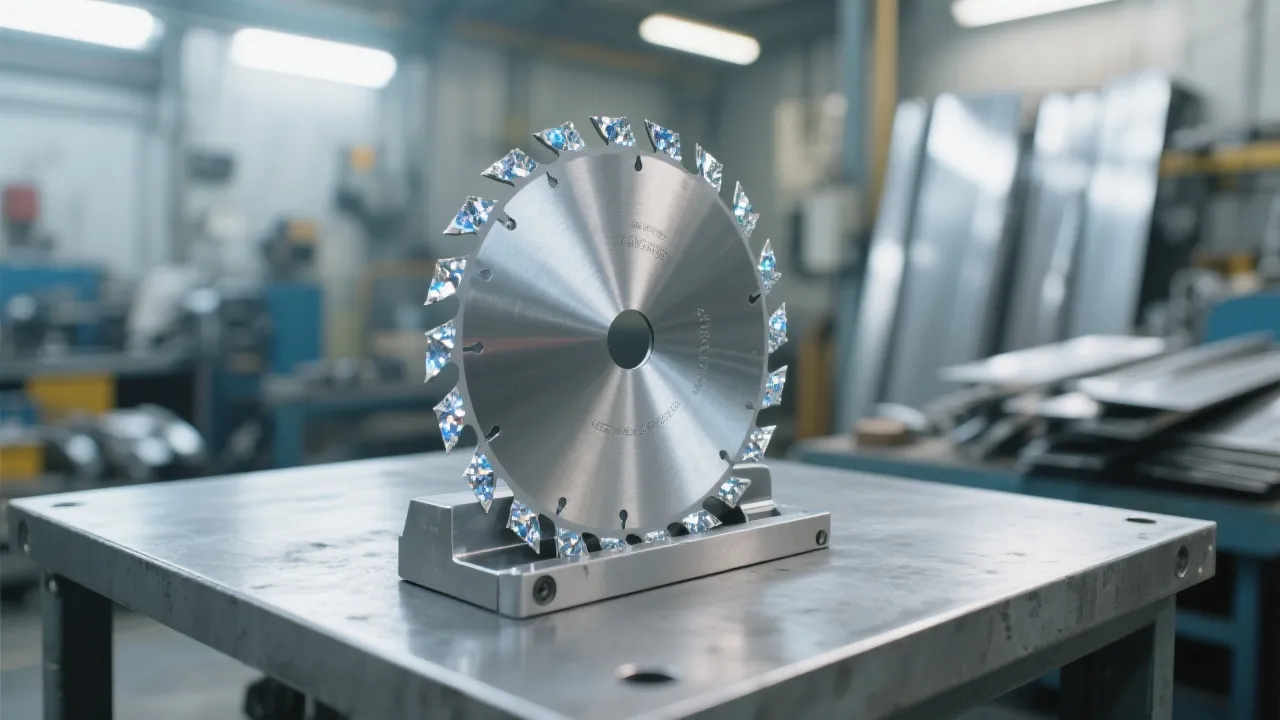
1) Base (Core) Stiffness Design: Don’t Let the Blade “Breathe”
Stiffness is the foundation of vibration resistance. For larger diameters or deeper cuts, a core that is too flexible will deflect and return repeatedly—creating a self-exciting loop. Practical levers include core thickness selection, heat-treatment stability, and slot design (geometry and distribution) to manage stress while preserving rigidity. In field terms, if the blade feels stable at idle but “sings” during load, stiffness and resonance are often the first suspects.
2) Segment Balance Calibration: Small Mass Errors Become Big at RPM
At typical stone cutting speeds, even slight segment mass differences can amplify vibration. Dynamic balance is especially important for brazed blades where segment consistency matters. A practical benchmark many workshops target is keeping total blade runout within 0.05–0.15 mm and minimizing balance-induced oscillation that shows up as periodic noise. If vibration appears “rhythmic,” imbalance is a prime candidate.
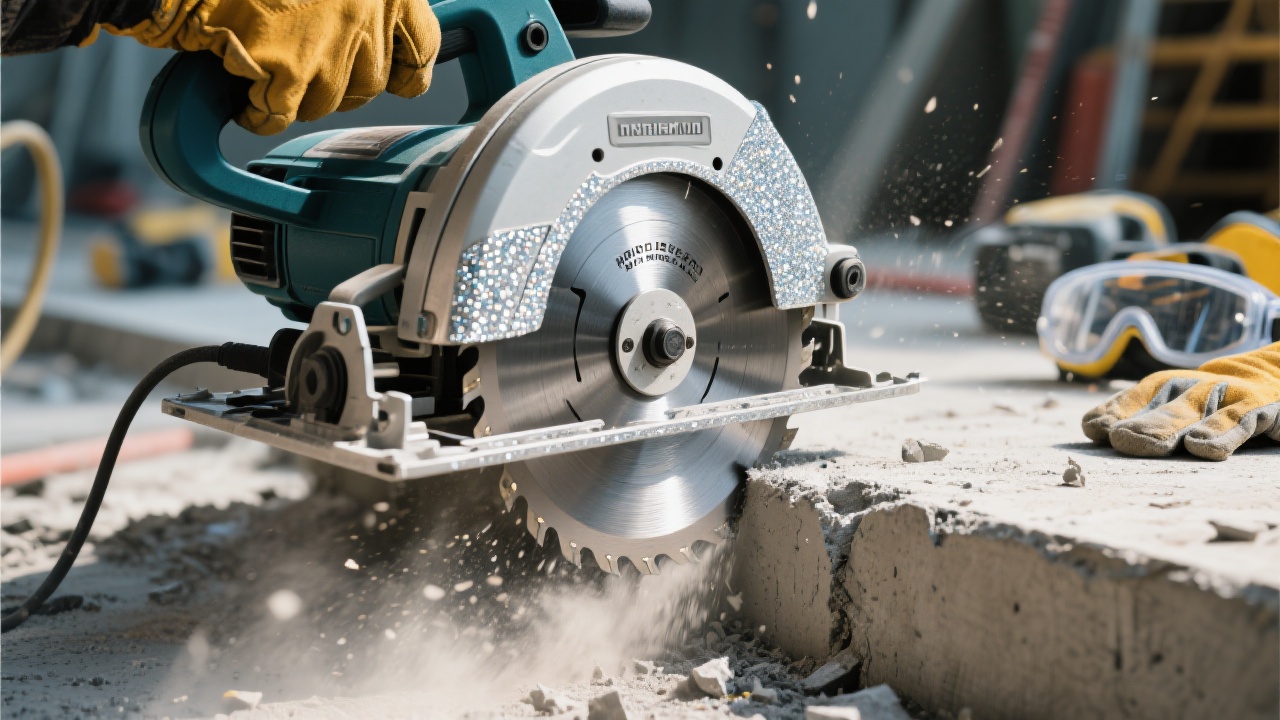
3) Clamping Precision: Flange Cleanliness and Flatness Are Non-Negotiable
Many vibration complaints trace back to “simple” mounting issues: dirty flange faces, uneven torque, burrs on the arbor, or worn clamping plates. When the blade is not clamped perfectly flat, it behaves like a warped disc under load. A strong practice is to inspect flange face flatness, keep contact surfaces clean and dry, and tighten in a controlled sequence. In production, this single discipline often reduces unexplained vibration events by 20–40%.
4) Machine–Blade Matching: Speed, Feed, and Stone Hardness Must Agree
A blade can be technically “good” yet unstable on a mismatched machine. Key variables include spindle power, RPM stability, coolant delivery, and the recommended peripheral speed for the blade type. For example, too high feed on a lower-power spindle increases torque ripple and can push the blade into resonance; too low feed may cause glazing and bouncing. Matching the blade specification to the machine’s stable operating window is often the fastest route to predictable results.
Standard Installation & Commissioning Checklist (Field-Friendly)
A consistent commissioning routine prevents “mystery vibration” and makes troubleshooting much faster. The following workflow is widely used by stone factories and jobsite crews to stabilize new blades and reduce early-life issues.
- Inspect flange faces: remove stone slurry, rust, and adhesive residue; verify no dents or burrs.
- Check arbor fit: confirm correct bore size and no play; avoid forcing the blade onto the arbor.
- Measure runout: use a dial indicator if available; aim for stable readings and investigate sudden jumps.
- Tighten evenly: use a cross pattern; keep torque consistent; do not over-tighten to “solve” vibration.
- Confirm coolant delivery: stable flow to both sides of the blade; clogged nozzles can trigger heat distortion.
- Gentle break-in: start with moderate feed for the first cuts, especially on dense granite or engineered stone.
- Record baseline: note RPM, feed, stone type, and operator; when issues appear later, this saves hours.
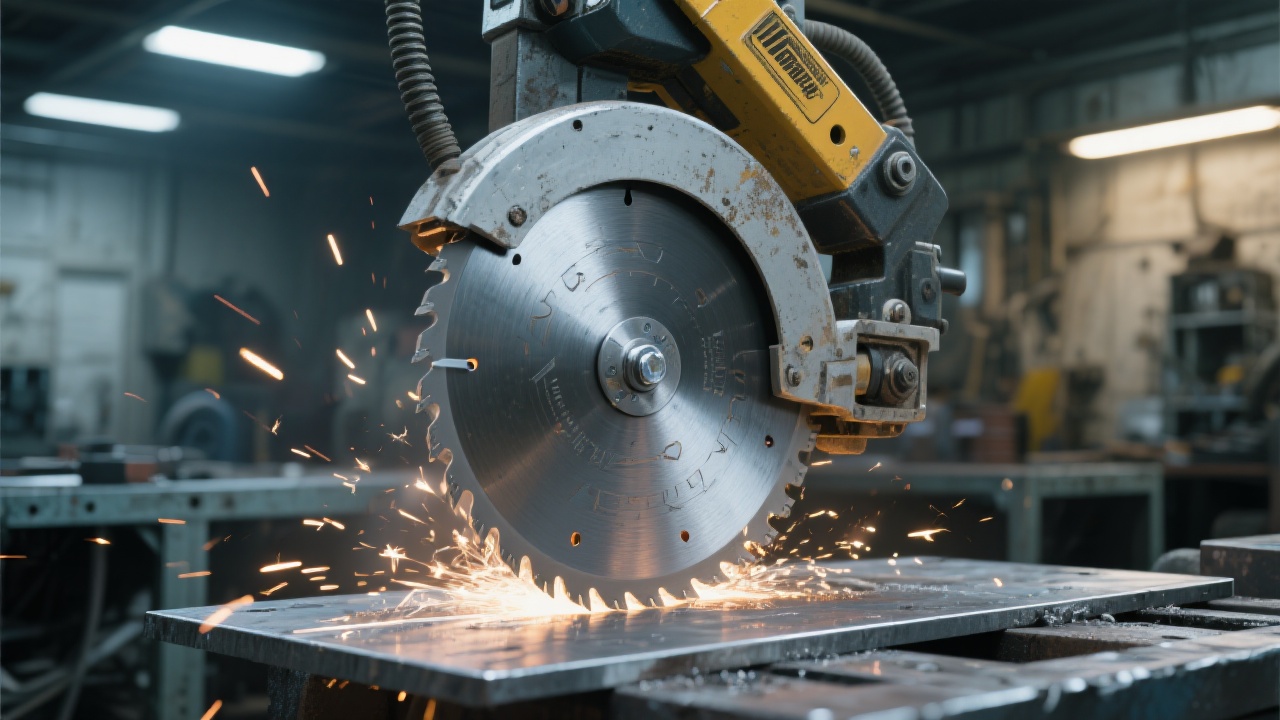
Troubleshooting: Fast Diagnosis by Vibration Pattern
In real production, the most useful approach is to connect the vibration “behavior” with the most probable causes—then confirm with one or two simple checks before changing parameters.
If vibration is rhythmic
- Check segment balance and segment height consistency
- Measure blade runout; inspect flange cleanliness
- Rotate blade 180° on the arbor and re-check behavior
If vibration increases with depth
- Reduce feed slightly; avoid aggressive entry
- Review core stiffness suitability for the depth and stone hardness
- Confirm coolant; heat can soften stability through distortion
If vibration appears suddenly
- Inspect flange faces for trapped slurry/grit
- Check bearing temperature/noise and spindle play
- Look for a chipped segment or impact damage
Real-World Application Notes: What Works in Plants and On-Site Crews
Case A: Bridge saw cutting granite slabs (stability-first tuning)
A mid-size plant reported wavy cuts and a “high-pitch” sound that worsened during long passes. The fix was not a single parameter change: technicians cleaned and re-faced the flanges, corrected runout, and reduced aggressive entry. After stabilization, the plant typically saw 10–20% smoother surface consistency and fewer edge chips in dense areas—without pushing the spindle harder.
Case B: Jobsite cutting with variable stone batches (repeatable setup)
On-site teams often face mixed stone hardness and inconsistent water supply. A standardized mounting checklist plus stable coolant routing significantly reduced sudden vibration events. Crews also reported that blades with consistent brazed segment quality were easier to tune across different materials, because the system behavior stayed predictable when stone properties changed.
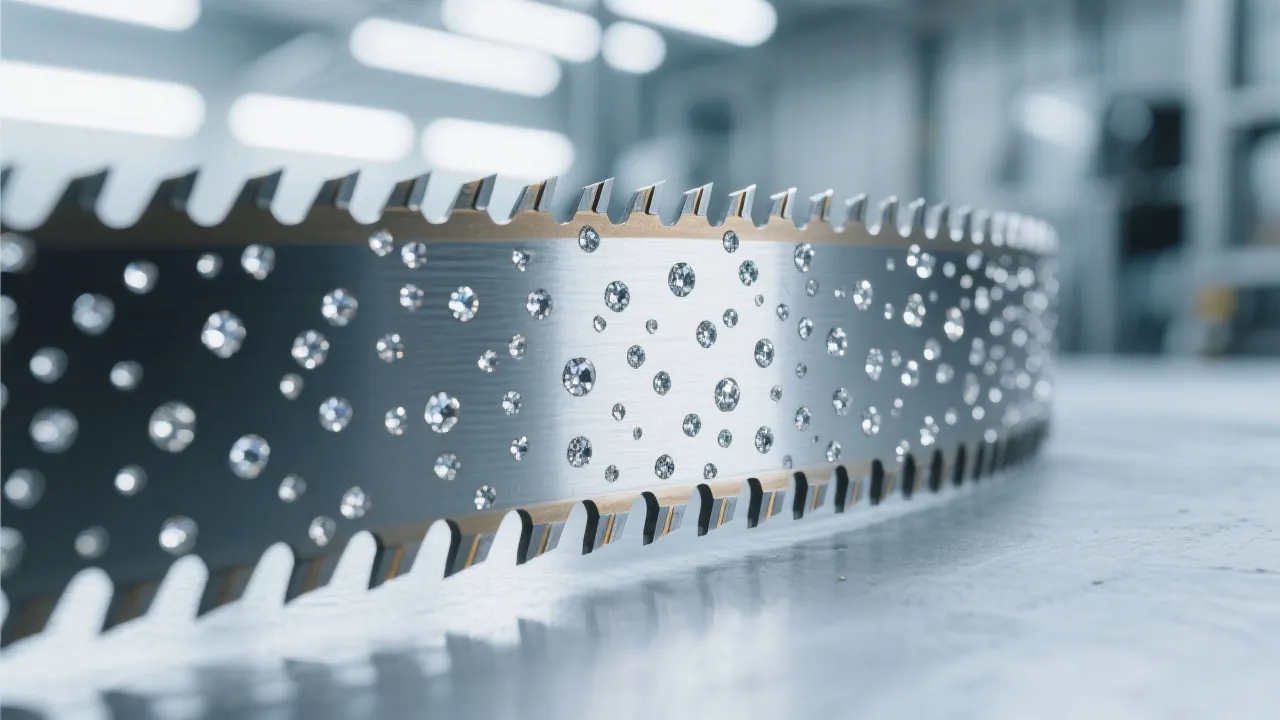
Where the UD Superhard Brazed Diamond Saw Blade 400H fits
For vibration control, consistency matters as much as sharpness. The UD Superhard brazed diamond saw blade 400H is often selected for its stable cutting feel under load, supported by a core structure designed for rigidity and a brazed segment approach that emphasizes uniform working behavior. In practice, this helps reduce “tuning time” during setup and supports cleaner cuts when the shop needs stable output across multiple shifts.
Interactive Q&A (Share Your Setup, Get a Clear Diagnosis)
What’s the fastest check when vibration starts right after blade replacement?
Verify flange cleanliness and flat contact first, then measure runout. New blades can still vibrate if the mounting faces trap slurry or if the clamping torque is uneven.
Can increasing RPM solve vibration?
Sometimes it shifts the system away from a resonance point, but it can also make imbalance worse. Change only one variable at a time, and confirm coolant and feed stability before increasing RPM.
What information is most helpful for diagnosing vibration remotely?
Blade diameter and type, machine model, stone material, RPM, feed rate, cut depth, coolant flow condition, and a description of whether vibration is rhythmic, depth-related, or sudden. With these, technicians can usually narrow the cause to clamping/runout, balance, stiffness, or parameter mismatch.
Need a Stable Blade Setup for Your Stone Line?
If you want a blade that prioritizes stable cutting behavior and repeatable commissioning, explore the technical details and application support for the UD Superhard Brazed Diamond Saw Blade 400H. Share your machine model and stone type, and get matching recommendations for RPM/feed and mounting checks.
Get guidance on the UD Superhard Brazed Diamond Saw Blade 400H